
Top 10 Albums of 2017
FOREWORD: This list is purely the opinions of the authors. It is in no way representative of the popular sentiment, merely what we feel aptly covers the best music of the year.
Jay-Z–4:44 (10)
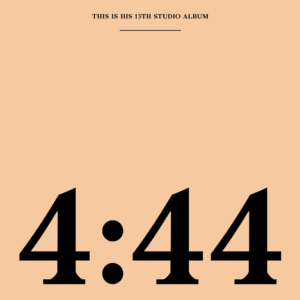
Roc-A-Fella Records head huncho Hov (one of his popular monikers) is back in the building with his newest record “4:44.” The proud Brooklyn native has reinvented himself yet again, leaving both gangsta rap and pop star labels behind and achieving the status of rap-wise veteran. Jay Z has come a long way from 2001’s “The Blueprint,” or 2003’s “The Black Album,” turning retro storytelling into a preachy narrative, speaking on all matters of life—from his mother’s homosexuality to his own infidelity. A street hardened hustler, Jay Z has taken to detailing the trials of life, while boasting luxury in classic Hov style, rhyming effortless bars across the dynamic sounds of “4:44.” His vulnerability through the record reveals a level of complexity to his music unlike anything he has shown us to date.
Unsurprisingly, revelations serve as a theme for the whole album, and his commentary on his severed relationships with former friends serves as the basis for a series of consecutive tracks on the record, kicking off with “Kill Jay Z” where Jay talks about Kanye West and working through his relationship with Solange in the wake of their past elevator incident (see internet). Over coarse synth and a sample from the Alan Parsons Project, Jay glides into a song that glares in the mirror looking at all the bad things that have bought him into the scrutiny of the limelight. He raps:
What’s up, Jay Z?
You know you owe the truth to all the youth
That fell in love with Jay Z
You got people you love you sold drugs to
You got high on life, that shit drugged you
You walkin’ around like you invincible
You dropped outta school, you lost your principles…
Through the patchwork of tracks bursts “The Story of O.J.,” Jay-Z’s commentary on black capitalism and the convoluted world of black stardom. The track comes rolling in over the trumpets and piano of Nina Simone’s sampled “Four Women” (think old New Orleans) and an iconic baseline crafted by Hov’s acclaimed engineer Young Guru, whose grunge aesthetic muddies the waters for lyrics devoted to the dichotomy of race relations and black excellence. In a cry for black unity within the community, he raps with immense passion, speaking with course language more fit for the synth of a track like “Bam.” More socially aware than the Jay Z we knew on “N***as in Paris,” “The Story of O.J.” functions as a refreshing tale of one man’s perspective on the tethering world around him.
To conclude his balladic album, he ends with soft jazz infused “Legacy,” addressing his children and his own future. Blue Ivy Carter commences the track with “Daddy, whats a will?” and the lyrics dilute into a victory walk for Hov, and a recounting of years gone by and money made. “Black excellency, baby, let ’em see.” “4:44” revealed the Jay Z his fans needed to see, the wizard behind the poems from “The Blueprint,” and the artist who will forever dazzle his audience.
Arcade Fire–Everything Now (9)
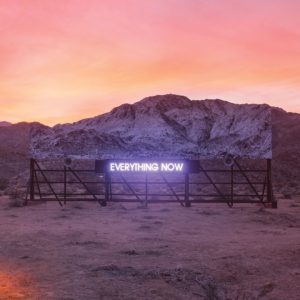
Arcade Fire’s “Everything Now” was released this year to mixed critical reception. The direction that the Canadian indie rock group took their fifth album was not readily appreciated by the entirety of fans and critics alike. Riding the wave of the anti-Trump movement that prompted artists to use their music as platforms to display their political and social commentary, Arcade Fire’s album works as a commentary in itself. Even from the title, “Everything Now” is a sharp poke at the modern world’s obsession with consumerism and accessibility. Yet, what separates their project from the pool of musicians-turned-pseudo-political-scientists is that they don’t let the message overpower the music.
From the title track, “Everything Now,” Arcade Fire begins the album with an exposé on their range of ever–changing sound. The group is heavily influenced by the 70s pop sound of Swedish group ABBA, opening with a joyful piano part and Win Butler (the groups frontman’s) soulful but accessible delivery. His lyrics revolve around the very much modern day “need” for “everything now” and how we crave instant gratification. Although a common criticism, Arcade Fire delivers the punch line with such grace and dedication to the actual music that the message becomes all the more profound. Tonally, the song is not a dreary decry of the human race, but rather an acknowledgement and celebration of it.
Another standout track is “Creature Comfort.” The song deals with teenage expectations of appearance and how degrading they are to its victims. The opening lines immediately intimate the listener with the brutal reality that Butler is describing:
Some boys hate themselves
Spend their lives resenting their fathers
Some girls hate their bodies
Stand in the mirror and wait for the feedback
This dichotomy between genders and how each suffers from their own insecurities is brilliantly stated with a rawness that reflects the instrumentation. The slowly oscillating synth lead that carries the melody gives the track that festival-banger edge, supported by a groaning synth bass that uses the rhythm section to caress its melodic counterparts, while all being powered by a heavy rock hi-hat drum part that fits the song wonderfully. Much like the title track, “Creature Comfort” is a depiction of reality. It exposes the grossness of consumer culture and how modelling magazines and gender roles can actually ruin lives. And yet, in that indescribable Arcade Fire sound, they find a way to celebrate the human condition while also criticizing it. That is the essence of the album and what makes “Everything Now” more than just commentary, but a painting of the human race that elegantly displays the evil while acknowledging that it is that quality that makes us human.
Lana Del Rey–Lust For Life (8)
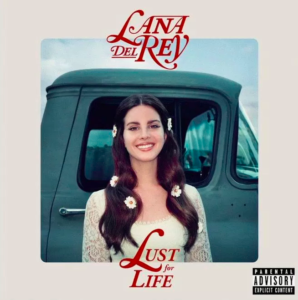
Lana Del Rey infuses an impressionist jazz ensemble with poignant lyrics to meld the most symphonic album of the year. “Lust For Life” unveils a dynamic artist who brilliantly utilizes features from our “trap” generation to balance a classically alternative album. With A$AP Rocky and upcoming artist Playboi Carti contrasting the legendary aesthetic of Sean Lennon and Stevie Nicks’s cameos, the record’s energy is broad and leveled.
Unfazed and original, Lana’s fearless prose shines truest through tracks like “When the World Was at War We Kept Dancing,” featuring political commentary on the future of America wrapped in the guise of bachata guitars and downtrodden lyrics. The entirety of the record waxes in nostalgia, with spacey lyrics and sleepy chords highlighting her most syncopated release to date. Leaving former studio album “Honeymoon” in the dust, her newest release is a more honest and introspective tale of getting the hell out of dodge and arriving in the music industry without a night bag.
Self aware and content, Lana alludes to a Hollywood lifestyle from the perspective of a wallflower, assimilating herself with the likes of Charles Manson on the track “Heroin,” and reaching for the Beatles’ shaggy grooves on “Tomorrow Never Came.” Her watercolor narrative sounds brilliant against the varied instrumental features on the album. Over the expansive 16 songs and 72 minutes of doleful wordplay, Lana divulges from her trademark blues and makes more hopeful music on tracks like “Lust For Life” with surprising ease, avoiding former allusions to death and drugs. Instead, sounds reminiscent of The Beach Boys’ “Pet Sounds” permeate, likely in part to the work of the more theatrical producer and co-writer Rick Nowels’ influence.
The opening lyrics of “When the World Was at War We Kept Dancing,” her personal political commentary:
Girls, don’t forget your pearls
And all of your horses
As you make your way across the pond
Girls, don’t forget your curls
And all of your corsets
Memorize them in a little song
Shake it up, throw your hands up and get loose
Cut a rug, lean into the f*cking youth
Lana has the promise of a star who goes beyond the mean product, releasing something far more honest than her counterparts. To boot, she sounds brilliant both as a musician and a socially conscious lyricist.
King Krule–The Ooz (7)
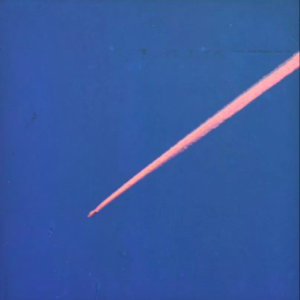
English singer-songwriter Archy Marshall is arguably not even a musician. After his various EP releases and full length debut album “6 Feet Beneath the Moon” in 2013, fans got the understanding that Marshall does not necessarily release projects for the sake of musical expression. While the tracks offered psychedelic rock inspired instrumentation, the substance lays in the lyrics and the transcendent experience that accompanies a thoughtful listen.
On “The Ooz,” Marshall takes this experience to the next level. The album plays like an absurdist rant filled with Marshall’s randomness that somehow coalesces as a single project that the listener can understand and appreciate. The spontaneity of Marshall’s delivery and the tracklist, how each song seems almost unfinished in its brevity and apparent lack of cohesion, resembles the same aesthetic as Frank Ocean’s “Blonde.” While sonically the two projects differ, Marshall and Ocean accomplish the same goal by creating projects that play almost like Greco-Roman philosophy lectures, in that both artists use their music to explain their feelings and their takes on life.
Nevertheless, the songs don’t fall short on their own. From the opening track, “Biscuit Town,” draws the listener in with its suave jazz instrumentation and Marshall’s matured delivery. Then, along with the boxing, industrial drum beat, Marshall breaks into his scummy cockney ridicules. He tells of his love life, his own mental health, and the absurdity of it all that can only take place in “Biscuit town.”
Marshall creates a sonic universe that includes “Dum Surfers” and “Half Man Half Sharks” (two other strong tracks in the album) and acts as the sonic consistency that gives medium to the dwellings of his subconscious. The title track, “The Ooz,” is as intimate as it is heart-wrenching. The descending chord progression, interjected by the sensual female vocals and the flickering, chorused guitar interludes, all build up to the third act of the song, where Marshall seems to be pleading his significant other for some form of salvation. His coarse, wailing delivery really touches the listener, elucidating his struggle, and, paired with his gorgeous poetic lyrics, creates a sentiment that reminds us of the emotional release only music can provide.
I don’t know why
I search for you
Could we align?
Could we meet here?
Until the end of time
This is the yearning, the tragedy, the beauty of life that Marshall captures with his album that goes beyond the conventional album track listing and thematic coherence that is expected. His tracks are cut straight from his mind, and because, like all humans, his subconscious is scattered with love and depression and all kinds of authentic feeling, the album bears that same absurdity that the human condition is predicated on. “The Ooz” is a depiction of life, coupling lyrics with music as one entity that paints Marshall’s perception–isn’t that what music should be?
A$AP Mob–Cozy Tapes Vol.2 (Too Cozy) (6)
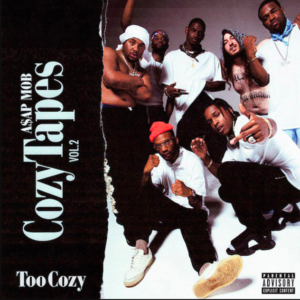
A$AP Mob’s second full length studio release for the hip hop collective features a host of guest appearances from more well known artists such as Big Sean, Quavo, and Lil Uzi Vert, to lesser known individuals such as Smooky MarGielaa and Zombie Juice and is a true demonstration of power in numbers. Like its predecessor, “Cozy Tapes Vol. 1 (Friends),” “Too Cozy” opens with a fashion critique skit paying homage to the style of its parent album. The most substantial upgrade from Vol. 1 is the consistent and stylish beat selection. While the beats on Vol. 1 took a backseat to the Mob’s lyrics, Vol. 2 seems to perfectly amalgamate both a substantial lyrical offering and powerful commanding instrumentation for each track. Although most of the beats throughout the project consist of snares and 808 drums, the Mob manages to seamlessly work these into each track without each song sounding completely identical.
Lyrically, the Mob keeps most of their verses hypnotically synchronized on wearing expensive clothes and hanging out with fancy women, evidenced in lines such as “Margiela, Marino now she wanna date me.” Although the lyrics are a mixed bag for some listeners due to their consistent bravadousa and high fashion flexing, it is hard not to be entertained by the A$AP Mob’s stylish cast of characters.
Although a significant portion of this project is filled up with non-A$AP voices, the transitions between each verse are seamless, and the flossy, top tier lyrics of Lil Uzi Vert, Quavo, and Big Sean are always a welcomed addition. From A$AP Rocky and Big Sean’s combative back-and-forth on “Frat Rules” to Gucci Mane’s iced out verse on “Please Shut Up,” it is clear that the guest artists on “Too Cozy” provide a varied and appreciated style to the Mobs newest project. Similar to Vol. 1, Too Cozy’s final track is a star studded banger of a grand finale that absolutely oozes with excess. A$AP Rocky alongside Quavo, Lil Uzi Vert, Playboi Carti, and Frank Ocean end the album on a high note while rapping playfully about their designer Raf Simon shoes.
Although the verses of the lesser known Mob members are slightly drowned out by the gilded lyrics of the guest artists, that does not appear to be very relevant in this album. It has become increasingly clear that when the Mob comes together for a Cozy Tapes project, its all about good friends, high fashion, and unnecessary flexing. And who doesn’t love a little bit of that.
Tyler, the Creator– Flower Boy (5)
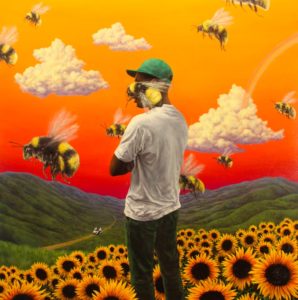
“Flower Boy,” Tyler, the Creator’s newest studio release is a meditative, colorful, and lullaby-ish project, a surprising contrast to his earlier work. In “Flower Boy,” Tyler, the Creator finally comes into his own. After being dragged down by the less talented members of his previous west coast rap collective and the boyish rapping of his youth, “Flower Boy” was the artistically defining moment for Tyler that his fans have long awaited. “Flower Boy,” in every sense of the word, is Tyler’s course correction, trading bratty, arrogant, and offensive lyrics for magical and succulent verses as he reflects on the shaping of his persona: isolation, emptiness, and sexual disorientation.
Although characterized as a rap album, only two songs (“Who Dat Boy”, “I Ain’t Got Time!”) on the entire track carry a classic rap structure while the remaining twelve are lusciously stuffed with progressive and traditional R&B and jazz sounds. As the album progresses, the inner psyche of Tyler is revealed. The album’s literal and figurative hallmark is “Garden Shed,” where Tyler reveals his often questioned sexuality, finally coming out both sexually and artistically. As the album unfolds from this revelation, he talks more about his lover in “See You Again” saying, “You’re the one that’s always running through my daydream” and leaves him messages in “Glitter”: “I’m losing my mind because I hope that we can be more than just friends.”
Flower Boy is a confession. Aware of past wrongs, misunderstandings, and insecurity within himself, Tyler attempts to remedy these through integration and his soft, honey-like verses. For years, committed fans have wondered when Tyler would grow up. He finally has.
BROCKHAMPTON– “Saturation”, “Saturation II”, “Saturation III” (4)
Due to the overwhelming popularity of BROCKHAMPTON in the past year, and their three outstanding albums “Saturation I,II, and III” all released in 2017, we have chosen to include all of them on our list.
Saturation
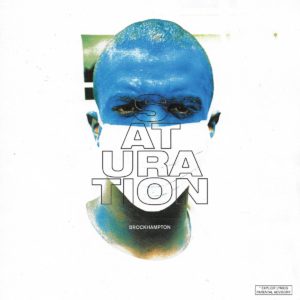
The diverse “All-American Boy Band” BROCKHAMPTON that includes white, black, queer and straight members have shocked the world with an attractive, self expressive style and lyrical aesthetic unique to them, and them alone. Confidently dressed in bright outfits and often masked in blue body paint, BROCKHAMPTON imbues this same style into their projects. Peppered with countless aggressive hits like “GOLD,” “STAR” and “HEAT”, which include loud, frantic vocals and intense bass, it’s easy to get addicted BROCKHAMPTON’s explosive style. Even when this aggression fades into slower tracks such as “MILK” and “SWIM,” the clean bars of BROCKHAMPTON’s leader, Kevin Abstract, compounded with smooth, well-produced beats create a project that’s near perfect.
Saturation II
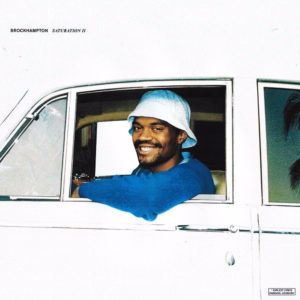
“Saturation II,” by comparison, focuses heavily on sound and varied instrumentation. Supported by a powerful production team, headed primarily by Romil Hemnani, “Saturation II” is filled with the light textures of woodwind and string instruments. The opening of the first track, “GUMMY,” is a heavenly rainfall of strings that amalgamates perfectly into a staccato hardcore rap verse by lead artist, Kevin Abstract. The light strings in “JELLO” and the ancient eastern guitar melody in “FIGHT” all provide a sonically fascinating album that is distinct from “Saturation I,” but still retains the same BROCKHAMPTON flare.
Saturation III
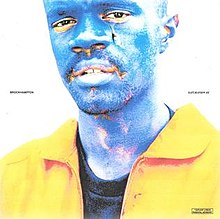
The strongest entry in the Saturation tryptic, “Saturation III” is an excellent synthesis of all the things that make BROCKHAMPTON great. After two well received studio albums in a year, BROCKHAMPTON reaches its peak in III with host of both energetically livid songs in “ZIPPER” and “LIQUID” and slower and more rhythmic songs like “BLEACH” and “JOHNNY”. III opens with “BOOGIE,” a lively, animated track accompanied by a ballad of electric trumpets and drums, seamlessly integrated with uplifting lyrics:
I’ve been beat up my whole life
I’ve been shot down, kicked out twice
Ain’t no stoppin’ me tonight
I’ma get all the things I like
This energy carries throughout the album and demonstrates the collective power of BROCKHAMPTON’s 14 artists.
Since I, each artists has grown and improved in their own right, greatly influencing the overall sound and quality of III. Although the confident, clean bars of Kevin Abstract direct the flow of the project, accompaniment from other members such as Matt Champion, Merlyn Wood, and Dom Mclennon aide the joint sound of III. The effortless transitions between members that were slightly choppy in II and III are a product of clean chemistry and practice resulting in a truly amazing album.
Mac DeMarco–This Old Dog (3)
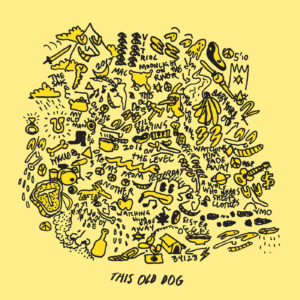
Mac DeMarco carries the onstage presence of Iggy Pop with the musical aesthetic of a 21st century Bob Dylan. Off the back of his mini-LP release “Another One” in 2015 and his latest studio album “Salad Days” in 2014, DeMarco has undoubtedly matured both in musical and lyrical content. He had already gained a reputation of a jangle-psychedelic pop sound, both with his imaginative use of synthesizers accompanying his commendable songwriting and guitar playing. Along with his live performances, which often featured such zany acts as shoving drum sticks up his rectum or lighting his body hair on fire, DeMarco has created an image as a college frat boy with the musical repertoire and lyricism of a quintessential folk musician (aforementioned Dylan or Leonard Cohen). This is why he is easy to brand as a 21st century iteration of these past legends, especially since the songwriting is just as clean and thoughtful.
On “This Old Dog,” DeMarco raises his aura to a new maturity that was unbeknownst to fans. From the subject matter to the instrumentation, DeMarco displays a new intimacy and realness that makes his stuff all the more engaging and even serious. He addresses such topics as his relationship with his father (an absent parent who suffered from a crystal meth addiction and cancer), and how he came to terms with reconciliation despite there not really being a relationship to save. From the leading track, “My Old Man,” DeMarco toys with his own mortality and the idea that he is drifting closer and closer to resembling his dad–something he has always been afraid of doing.
Look in the mirror
Who do you see?
Someone familiar
But surely not me
For he can’t be me
Look how old and cold and tired and lonely he’s become
He does this simplistically with a brusque, lighthearted guitar part that eerily complements the depressing subject matter. The title track, “This Old Dog,” follows suit with a slower guitar groove, backed by a classic rock rhythm section, yet perfectly paired with a caressing, low-attack synth that moans into the chorus. He discusses his seemingly absolute love for his significant other, while also approaching incredibly mature and serious topics like age and mortality–a common theme that sets DeMarco apart on this project as a more legitimate, intelligent artist. The poignancy speaks for itself, as DeMarco encompasses it so elegantly in such short language. That is the Hemingway-esqueness that defined some of his predecessors and is elevating his music to real genius.
All in all, DeMarco’s brutish elegance is something to behold on “This Old Dog.” His confrontation of his personal tragedies are dealt with in such a beautifully blunt way that the listener can only just absorb it and cry with him. This project was a massive maturation for him both musically and just as a human. You can see that as DeMarco approaches 30 (he’s 27), he’s already getting acquainted with the impermanence of life, something most musicians aren’t brave or talented enough to accomplish.
The National–Sleep Well Beast (2)
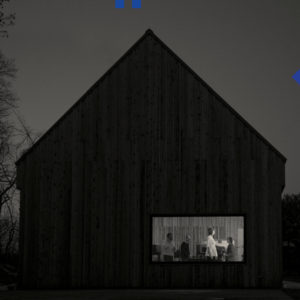
The National are beyond description. After each project, dating back to their self-titled debut release in 2001, Matt Berninger and co. have continued to reinvent themselves, building on their already distinctive sound. It isn’t just down to switching instruments, the National have taken each album as a separate idea, and have forged a strong tracklist each time under the guidance of particular themes. Their first stride into international recognition was on their fourth studio release, “Boxer,” in 2007, still considered today as one of the best indie albums of the 21st century. However, there was an expectation for yet another reincarnation, and fans and critics alike were concerned that the National could not pull it off yet again. However, from the first single released, “The System Only Dreams in Total Darkness,” it was evident that “Sleep Well Beast” was going to be that reinvention yet.
The track kicks off with an eerie set of female harmonizing vocals, which leads into the scorching guitar that plays call and response with Berninger’s lyrics. The percussion provides a bumping high-hat and toms doubling with the bass, which already gives the track a real aliveness that had been missing on the group’s previous efforts. As an ensemble, this is the instrumentation that essentially introduced the world to the project, and it defines it as well. Up until this point, fans hadn’t heard a distorted guitar lead on a National song, nor a classic rock drum fill. The guitar solo is the selling point for the track because it completes the song as a real rock tune. While the track is still infused with the dark, reminiscent bassful vocals of Berninger and the percussional complexity from the rhythm section that fans have come to love and appreciate the band for, “The System Only Dreams in Total Darkness” is a testament to the band’s craft: they will never lose the sound that defined them, but they are more than capable of fusing genres simply because they can–and the final product is glorious.
Other tracks like “Turtleneck” and “Day I Die” carry the same post-punk zest. “Turtleneck” plays like a full blown punk anthem, featuring some heavier, simpler instrumentation with a coarser, unhinged delivery from Berninger that will surely become a concert favorite. “Day I Die” is practically on the other side of the spectrum with a more light-hearted tone, despite the subject matter of mortality. With a lightning guitar riff and a rapid rhythm section, “Day I Die” reveals yet another facet of the National’s repertoire in their ability to craft accessible tracks that still carry the same emotional substance.
Berninger still gets incredibly personal and touching with his beautifully crafted lyrics on such tracks as “Guilty Party,” “No One Will Be There” (the track’s opener), and “Dark Side of the Gym.” Here, he laments on the dysfunctionality of his past relationships (spoiler alert: the National are still making sad music). These pay a sort of homage to the previous break up songs that the National specialized in. Poignant lyrics such as:
(“Guilty Party”)
I say your name
I say I’m sorry
I know it’s not working
I’m no holiday
“Sleep Well Beast” is well and truly a sonic reincarnation for the National. This album marks a complete ascension for them into real musical icons. Their sound is unmatched. Perhaps the fact that the drummer and bassist and the two guitarists are separate pairs of twins has something to do with the group’s effectiveness as an ensemble. Regardless, this album is gorgeous. Both lyrically and instrumentally, it has cemented the National as undeniably apart from the rest.
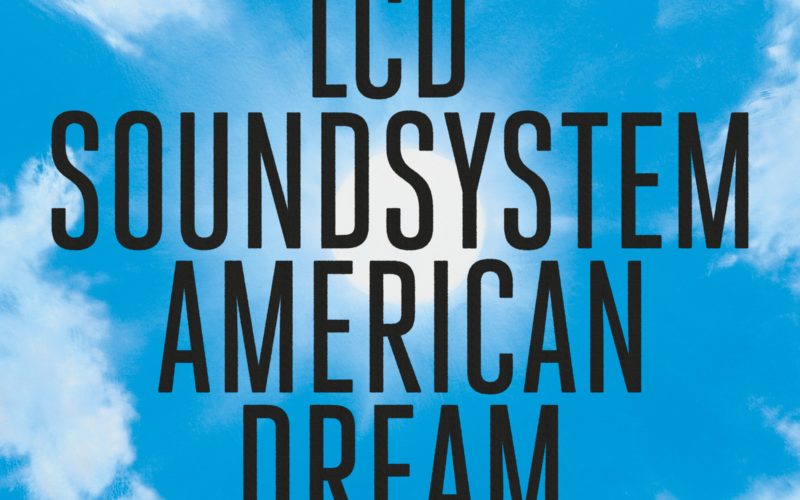
LCD Soundsystem–American Dream (1)
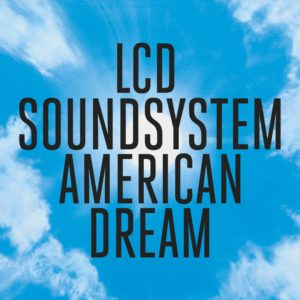
*An article for LCD’s “American Dream” has already been posted on our site as a solo review linked below.
https://gracegazette.org/wordpress1/?s=american+dream