
Is Grace Fueled by Caffeine?
According to the laws of student productivity, caffeine consumption at Grace is a daily ritual.
At 8:59 AM one can find students surrounding Mud in Astor Place to order their daily iced coffees and espresso shots, holding their Blank Street matchas, and chugging various colorful energy drinks. I myself rarely see students without a caffeinated drink on their desk or in their hand, and it’s in my hand too.
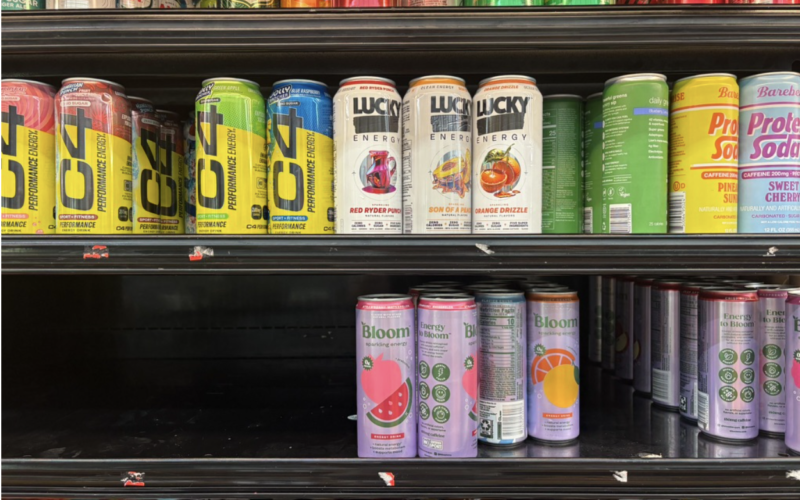
A personal rule of mine is to never have caffeine more than three times a week because it is hard to stop drinking it when it becomes a ritual. I’m exceptionally thankful I do not enjoy the taste of bitter coffee, but I get my fix from Bloom Energy drinks with 180mg of caffeine in each can. Like many of my fellow students, I drink Bloom when I need to stay awake and study both at night and during the day.
Caffeine is clearly a prominent figure in many students’ lives, often being a critical aspect of their morning, or even afternoon, routines. The gum, fun energy drinks, and creative coffee flavorings pull teenagers (and adults) into ritualistic consumption.
Anaika M. ‘27 is a big fan of matcha and iced lattes. She gets her beverages from Mud, Dunkin’, Blank Street, and Joe and the Juice. She is insistent that she is “not reliant on any form of caffeine.” However, she purchases her beloved beverages four to five times a week, between 7:30 and 9 A.M. on weekdays and 8-10 on weekends. Unlike other community members, Anaika needs her caffeine fix because she “loves the taste.”
Similarly, both Magnus B. ‘27 and Juniper K. ‘27 each have a black coffee or Monster Energy Drink, respectively. They each consume their preferred caffeinated beverages daily, however Juniper “does not rely on it.” On the other hand, Magnus let me know that he “gets a headache and can’t do anything productive,” if he forgets his daily cup of coffee.
Oona D. ‘26 exclaimed that she drinks black coffee “very frequently!” She loves the ritual, using an espresso machine she got for Christmas. She told me that she drinks caffeine because she often “wake[s] up early” and needs it to “stay conscious in class.” She does limit herself to only one cup a day because anything else would make her “too hyper.”
Instead of drinking caffeine, some students even chew it. Neuro Gum, a chewing gum powered by 40mg of caffeine, claims to support “sharper focus” and a “calm, blanched mood,” according to their online store-front.
Sebby P. ‘27 uses this tool to support his tiring Track and Field career and long nights studying. He said the gum was the “greatest thing ever.” The countless methods of caffeine being projected to consumers could lead to a vicious cycle of drinking coffee to stay up late to study, waking up early for school, and drinking coffee in the morning to wake up for first period.
Shui L. ‘27 managed to pull himself away from the grasps of a consistent caffeine habit, as he only has it when absolutely necessary. He told me his preferred way of caffeine consumption was a “Celsius, once a month.” Shui usually has an energy drink at 11pm when he “needs to get a lot of stuff done.” He emphasized that he “does not like drinking coffee or anything with caffeine” on a regular basis.
Harold J. ‘27 agrees: he usually drinks a RedBull or a Monster Energy Drink before school or during tutorial. Similarly to Shui, he does this after a night of studying. Neither of them rely on caffeine to study or hangout with their friends. Similarly, Raphella G. ‘28 does not consume any caffeine. She said she “doesn’t like the taste at all, not even energy drinks.”
Surprisingly, Lex A. ‘26 recently showed immense levels of will power as she decided to stop drinking coffee because of its many negative effects. For example, caffeine makes people extremely jittery and anxious, which Lex “really does not enjoy.” She also has let go of her daily beverage because of the rise of “prices, even chains like Blank Street or Starbucks are getting too expensive.”
Caffeine addiction is easy to fall into. Grace Nurse Alison Palmer said that it only takes a couple of consistent mornings with an iced latte to become reliant. “Sometimes it even takes up to three weeks to not have any withdrawal.” For students who consistently drink caffeine, Nurse Alison emphasized that headaches, sleepiness, and irritability, because of withdrawal, are exceptionally common with students who come into her office.
Many students rely on caffeine to support their busy schedules. Sometimes, student-athletes get home at 8 P.M. and need to cram for assignments. The pressure to be able to complete work by a strict deadline is inevitable, so caffeine is used as a tool to support longer hours awake leading to longer hours studying, less time sleeping.
Whether it is a daily cup of coffee or an occasional energy drink during finals week, many Grace community members need their caffeine fix. Even though many students insist that caffeine is not ingrained in their routine, it seems that Grace does, in fact, run on caffeine.
India B. is a Staff Writer for the Grace Gazette.