
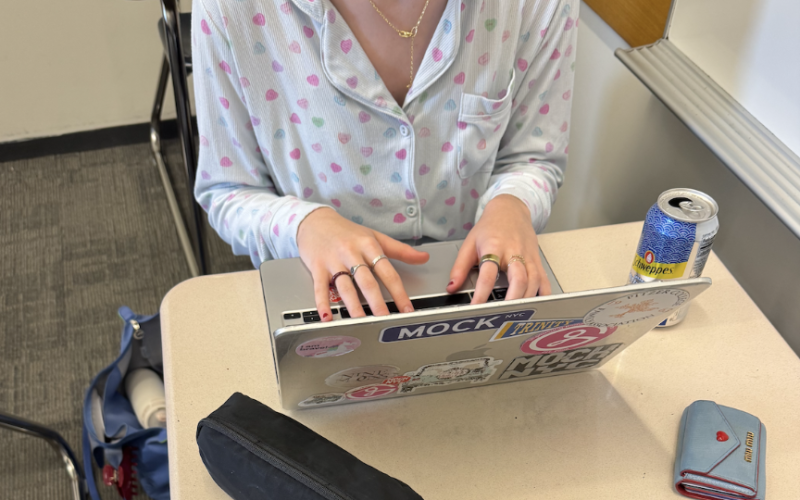
The Methodology of Procrastination: Grace’s Top Five Tactics
Media Provided by: Cassie B. ‘26
Observably, the one consistent trait among the entire spectrum of academics is that every single person has their own way of procrastination. Building in downtime or “me-time” is inherent to any student’s routine, and today Grace Church students offered their own best ways of doing this:
# 5 – Scrolling on TikTok
Ranked the lowest at the number five spot is doomscrolling for multiple reasons. The first being it is the least interesting and most casual form of procrastination. To cut it short, every single student has this one in their arsenal. With multiple students labeling this as their most common way to procrastinate, those being Eleanor C. ‘26, George D. ‘28, and Sebby P. ‘27, it scores points for effectiveness and prevalence, but loses out to either more interesting or more specific variations. Doomscrolling will make every top 5 list standard, professional, consistent, but never the standout.
# 4 – Not checking Gracenet
Getting creative here. This method follows the idea of “if I can’t see it, it doesn’t exist,” as said by Seba H. ‘26. What loses points for this one is that it may take more effort to actively not check Gracenet than it does to just quickly open it, leading to reverse procrastination. On top of that, it could be argued that this method gets trumped by the more dedicated procrastinators, who are willing to go to further lengths to not get things done. Nothing flashy about this number 4 pick, but its versatility and potential for other activities are what keep this method coming back every season.
# 3 – Video Games
Breaking into the top 3 with playing video games, the variance and usage rates just cannot be understated. Grace students play tons of different video games after school and on weekends. Sophomore Jack D-V. ‘28 stated, “not only are they fun, [they are] a good way for me and my friends to play together.” A perennial all star that makes every list, the only downside to this pick, which inhibits it from going higher, is the low adaptability; Inaccessible during school unless through unauthorized computer usage, and easily shut down by parents during home-working hours. Strong pick with much upside, yet risky low-end turn out if used incorrectly.
# 2 – Preparing to do the task
Now we are starting to get into the real heavy hitters. Some of the best procrastination is done when you can easily gaslight yourself into thinking you are actually doing something, when you aren’t. In this case, the whole idea of this method is to make it seem like you are getting ready to do the actual assignment, when all of this buildup is truly unnecessary. It is true that some kids work better after eating, showering, and doing other things. But eyebrows start to raise when you include activities like scrolling, napping, playing video games, and other forms of procrastination. A true umbrella category, students like Ahilya E. ‘26, “could literally spend two hours getting ready to do my assignment before I do it. I like to take my make-up off, shower, eat… it’s easy because it makes me feel like I’m getting the ball rolling, when in fact the assignment is just getting further and further from being completed”. Superstar potential here with almost no downside, just a little too specific to take the number one spot.
# 1 – Cleaning
Simple, easy, and an actual productive thing that every kid does in place of other productive things (mainly homework assignments). Cleaning is the ultimate procrastination method because everyone can do it, your parents would love it, it is as fulfilling as doing the actual homework, takes plenty of time, and is something that is actually productive even when procrastinating. Not many notes on this one. The older generations love it, the younger generations understand it, and the entire league sees it every assignment. Superstar material right here.
Wes T. ’26, the author, is a senior columnist for The Grace Gazette.