
Student Voices: How to navigate future careers facing the advancement of AI?
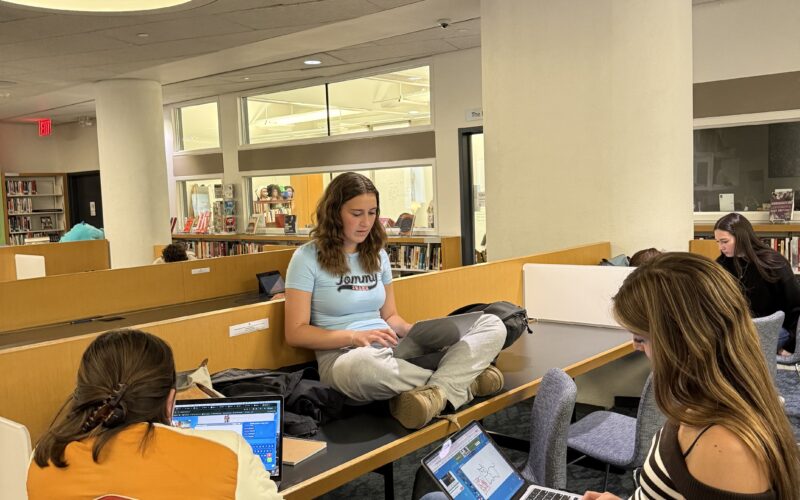
Media provided by Sally P. ’26
Although artificial intelligence may take our future jobs, it will never replace human interaction. The compassion, respect, and ability to read emotions that many Grace students have is invaluable. I had discussions with 10th graders who have an idea of what their future career paths will look like, to determine fears and predictions surrounding the impacts of AI on their future jobs. After having these discussions, their concerns about how AI will impact their futures have been voiced. Although the future of AI is tentative, the varied skill sets and impressive work ethic of many Grace students will set them up well to face any challenges they encounter in their future careers.
Some students are significantly less worried about the impending effects of AI. Charlotte G. 28’, wants to be a speech pathologist or occupational therapist. She believes that “AI is a helpful tool, but it can’t replace the human brain.” She wants to work with children and shared the insight that if AI were able to replace medical charting without making mistakes, doctors and therapists could mostly focus on patient interaction. Charlotte feels strongly about staying passionate about speech therapy regardless of the impending advancement of AI services. Humanity is still highly valued in careers currently.
Students are very aware that AI will impact their futures, regardless of how much they know about the subject. With AI becoming more widespread, only 44% of College Students feel “very prepared” for a career in the rapidly changing job market, worrying their years of work in school won’t be valued.
Edin C. ‘28 ran a social media page of interviews with different business men and women for his IP10 project, and is clearly very passionate about what made his interviewees so successful. Unlike students in the study above, Edin has not been deterred from continuing his goals to be a businessman. He believes that personal skills cannot be replaced, showing there are still students pushing to achieve their goals in spite of AI advancements.
Although students recognize the rapid development of AI, they don’t see it as a completely trustworthy technology tool. Edin believes that AI will not be able to replace business owners of large corporations anytime soon, as it would be a “huge liability”, especially for companies to put trusted funds and roles in the hands of experimental technology.
Some students like Mark S. ‘28 are focused on AI impacting the human memory and believe that AI will negatively impact people’s intelligence. A PMC study proves that the use of generative AI may erode human cognition due to over-reliance. Mark’s concern lies mostly in AI’s effects on human memory and taking over communication with real people.
Mark wants to go into city planning, causing the impending development of AI to be a concern for him. He told a story of refusing to allow an Uber driver to use self-driving mode because of how deeply he values people being needed and involved in the work that they do. Mark worries about the advancement of AI, but is still passionate about city planning.
Although students are not experts in AI, they know one thing for sure: AI will impact their career paths. Regardless of these changes, students at Grace are determined to further their goals and succeed in their chosen future careers.
Peyton D. ‘28, the author, is a staff member of The Grace Gazette