
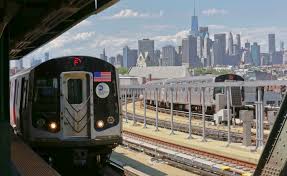
MTA: Progress and Reform
Ask anyone of the roughly 8.5 million people that live in New York City about their transit system, and you’ll be likely to hear common descriptions be slow, ineffective and aggravating. This is because over the last 8 months it feels like the to-do list of fixes for the MTA keeps getting longer, with fewer and fewer things being crossed off. But what are the things that get responses like efficient, helpful and enjoyable?
Throughout the past 3 years, the MTA has finished two major service expansion projects to help expand accessibility to different parts of the city and help as many people as possible. In September of 2015, the No. 7 line saw a one stop expansion from 42nd Street-Times Square to 34th Street-Hudson Yards, located at 34th street and 11th avenue, becoming the new Manhattan-bound train final stop. This ‘running tunnels and underground structures project’ (nysspe.org) won the 2013 New York State Society of Professional Engineers Construction Project of the Year Award, and has paved the way for the future design of NYC subway stations.
More recently on January 1st, 2017 the Q line was expanded to 96th Street and 2nd Avenue to bring more transit options to the highly underserviced Upper East Side of Manhattan. Many people have experienced how helpful this expansion has been. Previously, the No. 4, 5 and 6 lines were the only ones running up the East Side. Before the expansion, getting to GCS from the Upper East Side in the morning would always bring the dread of having to squish in with tons of other people also inconvenienced by the lack of trains in their area. With the addition of the Q train, that extra morning hassle is gone and Second Avenue is no longer the mess it used to be from years of subway construction.
Another big improvement to transportation service by the MTA is the addition of train E.T.A. (Estimated Time of Arrival) clocks in all stations. Most recently, these have been going up along the A, C, E lines and N, Q, R, W lines. Michael Prieto ‘20, who takes the R line, said “this was a great improvement from what they had before.” He also mentioned how “with all the work being done on the weekends, it’s exciting to see what will come from it.” Rev. Hummell, who take the A line, thinks that they are “very helpful” for him and his commute, and likes how they keep him “in the know” about his train ride. He also appreciates the improvements being made by the MTA such as increased transparency, improved cell service and wifi in stations, and acknowledgment of how, for so many people, the subway is a “less stressful and cheaper” mode of transportation around the city for so many people.
One of the most important parts of riding on the MTA is the experience, and this is an issue that the MTA has emphasized as something they find very important. You can find plenty of information on the ‘Riding Safely’ page on the MTA website, such as the MTA’s message addressing the issue; “The MTA is doing all it can to make riding our subways, busses and trains as safe as possible.” (mta.info). There they have posted information surrounding train, bus and platform safety; evacuation procedures; and how best to handle sexual harassment when riding the subway. All of this shows how the MTA is still dedicated to you, their customers, and their willingness to make your ride easier and more enjoyable.