
Everything Sucks and Politics are Boring, How About Bees?
Everything may not necessarily suck, but everyone seems to think so. The recent months have cast a spectre across young Americans. A sense of helplessness and a raging distrust for the system.  Yet, while taking up in protest against the ignorance one toupéd man is nothing short of noble, 21st century Americans must come to terms with the fact that Donald Trump only mutates into this leviathan because we allow him to. Elections create problems; they create disgruntled populations, while appeasing others. While the issues and potential outcomes brought on by this election are downright horrifying, we let them win by treating them as a force more powerful than the process of politics. The world has its many problems. These do not operate on four-year terms. In a time when media coverage dictates what we soak up, what boosts ratings and viewers is what makes it to our screens. This has unfortunately left the global disaster known as Colony Collapse Disorder (CCD) to be abhorrently neglected by the public.
Half of all bees in America died last year–well 44%. This is a fact that has been circulating a little more forcefully, yet most are unaware of its actual implications. Let’s review some things. According to the Huffington Post, bees pollinate every 1 in 3 bites of food we eat. As food processing and online services become more institutionalized in the way that we eat, this statistic may not manifest itself readily to the average eye. And yet the same pattern emerges in recent decades, where if a problem cannot be seen immediately it must not exist. We saw and continue to see this with racial profiling (beyond police brutality), climate change, global poverty, and unemployment (India has over a seventh of the world population and has a minimum wage of $0.28/hour). CCD falls under the same category. Many people are actually afraid of bees, but we cannot ignore the fact that they are imperative to our survival. The first step is information. Getting people’s attention with some scary statistics is one thing, but to address the issue, we must understand it.
Colony Collapse Disorder can be attributed to multiple factors, and is exceedingly difficult to eradicate. These causes include neonicotinoids, varroa mites, and monoculture farming.
Neonicotinoids
Neonicotinoids are often used as pesticides which not only affect bees, but “biodiversity, ecosystem functioning and the ecosystem services provided by a wide range of affected species and environments.” 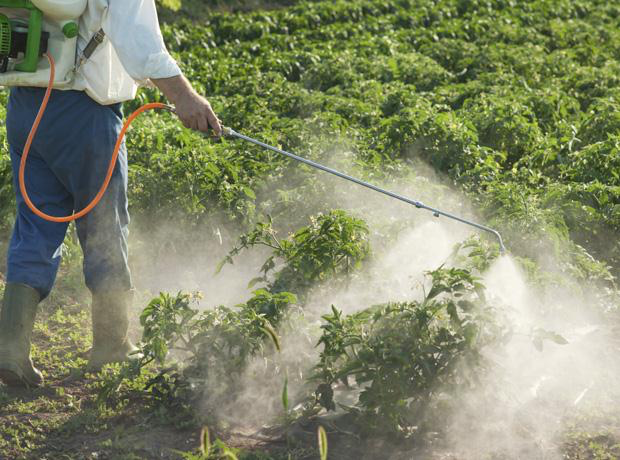 As the Task Force of Systemic Pesticides suggests, far from protecting production of food, the use of neonicotinoids threatens the foundation that enables it, jeopardizing natural pest controllers, habitat engineers, and pollinators – key roles in a functioning ecosystem. According to the Task Force, “Neonics impact all species that chew a plant, sip its sap, drink its nectar, eat its pollen or fruit,” and its toxins can remain embedded in the soil for years, weakening the stability of nearby ecosystems. As nerve poisons, the neonicotinoids can kill non-targeted species, and can cause impaired sense of smell, memory loss, altered feeding behavior, and in the case of bees; reduced foraging. Despite fierce opposition from many governments and organizations, neonicotinoids remain economically relevant, as their yearly fiscal sales make up 40% of the insecticide market. Clearly neonicotinoids have been damaging beehives for years, yet industry continues to place profits above the people, and consequently we might be moving towards a bee-less future.
Varroa Mite
 The Varroa mite has risen in significant infamy since their initial introduction into Florida in the mid-1980’s and has subsequently become a major western honey bee pest. Varroa mites are classified as external parasites that attack both honey bees and their larvae by sucking their blood. This both weakens and shortens the bees life, and in the case of the developing larvae, many emerge into adulthood with various deformities, i.e. missing legs or wings. Varroa mites spread from colony to colony by attaching themselves to worker and drone bees and effectively drifting with them until they find a suitable host. Although it is difficult to determine whether a colony is infested by Varroa mites, it is easier to detect infestations that are well developed. Effectively, if under a controlled situation these colonies should be separated from others in order to halt further infestation. Being as this may, the spread of the Varroa mite is inevitable, and can only be slowed by beekeepers, and their efforts to rejuvenate the bee population.
Monoculture Farming
Monoculture farming, or the agricultural practice of growing a single crop in a farming system at a time has greatly  affected the manner in which bees pollinate. Countless reports show that honey bee pollination is at it’s peak when a wide variety of flowers are in bloom. As a result, when there is diversification in types of flowers, honey bees will move themselves to different patches of flowers as they come into bloom. However, this system has been ruined by the practice of monoculture farming, as there is no incentive for the bees to pollinate an apple tree when there are hundreds of apple trees to be seen. By planting crops in this monoculture formation, we have increased the scale of flower patches and effectively limited the scope to which bees can pollinate. Because the patch is so large, the bees can only pollinate and feed for the short time that it is in bloom. This leaves many colonies starving and, without proper nutrients, forces them to fly miles until they can find another suitable patch causing stress and inherently makes them more susceptible to diseases and pesticides. According to the USDA, the United States alone is losing 30% of it’s colonies a year to this practice, and soon there won’t be any bees to speak for.
Social Relevance
Something enters society’s attention deficient gaze when gains relevance. From this simple understanding, CCD should be frothing from everybody’s lips, yet it has failed to reach the status of what can be explained as Richard Dawkin’s concept of a meme: a unit of viral phenomena.  What the issue lacks is a pertinence to the everyday lives of people. In economics and general life, there are short-term and long-term benefits and costs. We save things to spend them later, and we get difficult tasks done quickly, like filing taxes to avoid the long term cost of being arrested. But these are tangible. They orbit our lives regularly, so we are familiar with them. When you can turn on any channel at any given hour, and guarantee that you will hear mention of the President, that becomes a tangible problem. It infests into our worries and paranoias because that is all we are allowed to worry about. We can’t see malnutrition or human trafficking because it’s far away in some overseas country we never studied, but these are problems that make our “political troubles” look pleasant. This is not to say that our problems are trivial, but in a time when we see scenes befitting of an apocalypse, instead matched to an unfortunate byproduct of the democratic system, one wonders why these sort of reactions don’t associate with actual apocalyptic foreshadowings. Everything does not suck, but bees are dying. We cannot sit idle, and we most certainly cannot prioritize the world’s problems when most of them remain unknown to us.
“If the bee disappeared off the face of the Earth, man would only have four years left to live.”
–Albert Einstein
*We would like to thank Tristan Pinto ‘18 for supplying us with the information to complete this article. If you want to get more involved with the ongoing bee crisis be sure to join the Bee Club which meets after school on Wednesdays in room 208.
Very well written and interesting article.
This is a terrific article – best thing I’ve read all day!