
Braving the Storm
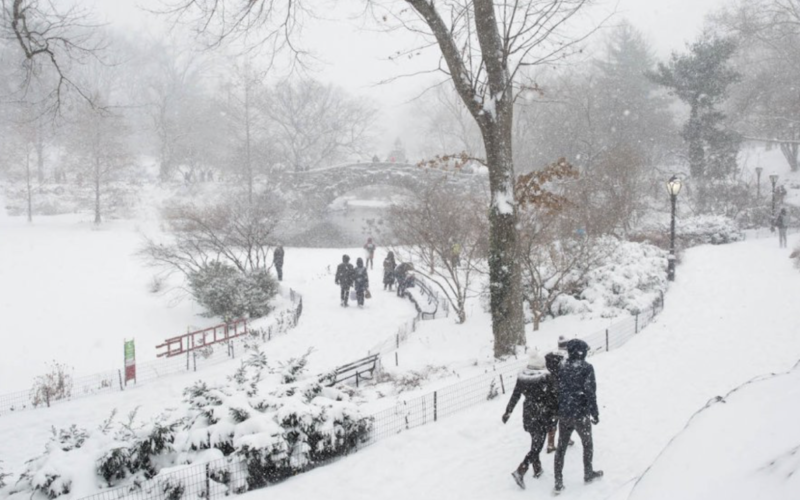
This past weekend, the Northeast coast was slammed with unparalleled snowfall and wind speeds as a cyclone traveled down the coast. From Florida to Maine, counties all down the coast experienced extreme temperature drops, immense winds, and extraordinary snowfall. Nicknamed the “Bomb Cyclone” (Bomb Cyclone), the storm hit cities like Boston and New York with fury.  The storm began on early Thursday morning, lasting all day and posed a mass of aftershocks that would hinder the inner workings of big cities for the following days. New York Area airports Laguardia and JFK alongside Boston airport delayed over thousands of flights, Laguardia completely shutting down at one point due to the mass of snow and overwhelming cold. New York City experienced 8-15 inches of snow and a wind chill that put the temperature at minus 20. Mayor Bill DeBlasio shut down public schools on Thursday, advised against motor vehicle travel and suspended Long Island train service for the day, with workers braving the conditions the following days to repair damages and clear roads.
Meteorologists and scientists have worked to understand why this cyclone was so substantial, leaving cities quite literally frozen as it blazed down the coast. The answer has much to do with climate change. As the arctic region’s temperature increases, the cold air that surrounds the continent begins to drop south. The drop of cold air is a result of the weakened jet stream which helps contain this cold air within the arctic region. This influx of cold air mixing with the warmer air of the U.S. proves to be the perfect recipe for a gigantic cyclone (Why So Cold?). The cyclone inhabits such cold temperatures due to the immense pressure drop that occurs when a cyclone is born. It picks up speed, and travels (usually over ocean) gathering strength and velocity until hitting landmass and dumping its precipitation.
With this storm behind us, can we expect many more of these? The answer is yes. However most of the storms will not be as large as the “Bomb cyclone,” the continuing drop of arctic air will send snowstorms our way. While they may hit land before us, leaving the cities North of us with a heck of a cleanup job, we may experience some light snow or rain, and freezing temperatures that will make us all want to cozy up by the fire and stay inside for the remainder of the winter months.