
Black History Month Chapel: A Celebration of Black Joy and a Reminder to Educate Yourself
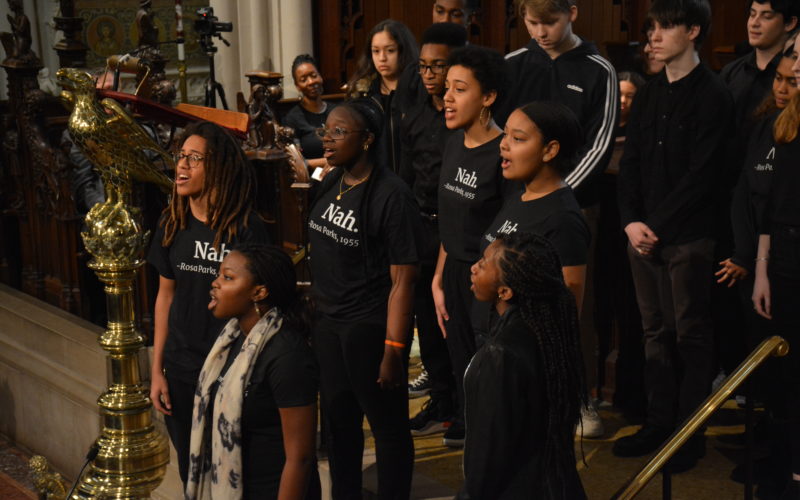
When I saw Kai Williams ‘21 approach the Mic at last week’s Black History Month Chapel, I knew she was about to go off. Her recitation of Amanda Seale’s “Black Girl Magic,” perfectly — and fiercely — depicted the purpose of Grace’s Black History Month Chapel: to honor African American history and tell the stories of people who often feel underrepresented at Grace — and in our greater society. The entirety of Grace watched in awe as Kai recited “How sweet the sound of a black girl’s point of view, knowing that nobody does it like we do, boo. Pride in our power, strength in our strides, you can attempt to imitate. But soul you cannot buy.” The first time Kai ever saw Amanda Seale recite her poem, she was in awe of her courage. She says “I loved how confidently she was able to speak about her culture and roots. I wanted to be able to do that too.” And she did. Kai, along with numerous other performers from Amazing Grace, spoke about an African American experience that resonates with them — and that is often overlooked — and powerfully gave representation to an extremely important point of view.
This year’s Black History Month Chapel was the continuation of an important conversation — initiated last year by Black students at Grace — about an unsafe racial climate at our school. Students expressed their concerns that Grace is not, in fact, an anti-racist institution; students had frequently heard racial slurs in the hallways at Grace and felt that, generally, Grace was inadequately addressing the fact that many Black students experienced Grace as an unsafe learning environment..
Since this concern was finally addressed by Grace’s administration last year, progress has been made. Mirely Garcia ‘20 spoke at last year’s Black History chapel about her experience as a Black girl at a private school, and revisited that chapel this year, to address the changes that have been made in the past year. She says that while progress has been made, our community still has a ways to go. She explained how non-Black students at Grace can act as allies, including the entirety of our community in this critical conversation.
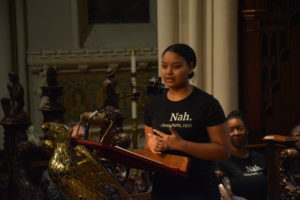
Her message is this: It is ok for students to feel unsure about what might cross the line that separates racially sensitive comments from insensitive ones — but students must educate themselves as to how they should handle these situations when they arise. How can non-Black students educate themselves? They can acknowledge and remember past moments of racial inequity that have occurred at Grace — and subsequently ostracized Black students. They can initiate conversations with each other, and take those conversations to Amazing Grace, and they can acknowledge the very real differences of their lived experiences to those of Black students. It is the responsibility of the entire Grace community to ensure that Grace is a safe learning environment for everyone; recognizing the experiences of Black students at Grace should be something that we do every day — not merely on the days when Kai William’s recitation of “Black Girl Magic” inspires us to do so.