
Isolation to Identity: How the Pandemic Changed Who We Are.
Media provided by Caleb L. ‘26
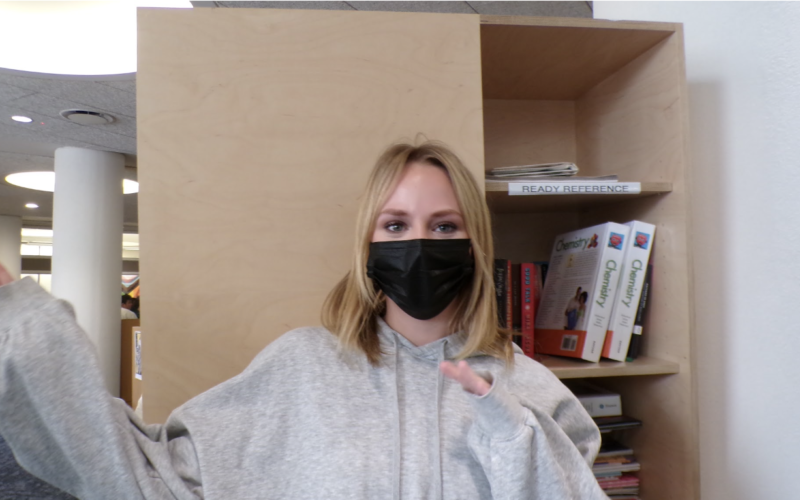
COVID-19. Over seven billion people were affected by this global pandemic. Houses, lives, and families were disrupted in a matter of two years. Many scientists were left at an impasse, curious about the origin and the worldwide impact; what about the children who lived through it? Recent data compiled by the Centers for Disease Control and Prevention showed that in 2021, more than a third of high school students experienced poor mental health during the COVID-19 pandemic. But statistics only tell part of the story. How are they doing now? How did this pandemic affect their relationships, mindset, and who they are today?
Mark S. ‘28 went through the pandemic when he was in fifth grade. He does not like to reflect on the pandemic, describing it as a difficult time, but acknowledged that he learned several skills he still uses today. Mark mastered multiple operating systems and emphasized that before COVID-19, he “never washed [his] hands for 20 seconds and never disinfected [his] shoes when walking through the door.”
When the world shut down, some friendships only grew stronger. Charlotte G. ‘28 focused more on her relationships with the people she loved. She said that COVID-19 did not prevent her from seeing her close friends; instead, it strengthened their bond. What began as simply being “best friends” grew into something deeper and more comforting: One of her friends “basically became my sister.”
It wasn’t the big moments people missed most, but the small, everyday ones. Emma O. ‘28 described her COVID-19 experience as somewhat positive, not out of optimism but because she was able to relocate to a warmer climate. While she appreciated the change in environment, she also came to a realization. The pandemic taught her to value time, especially the present and everyday experiences like taking the subway, which she had once overlooked. She stated, “You don’t realize how much value something has until you lose it,” using “value” as a way to express how the pandemic made her appreciate her life and the importance of her relationships.
For most students, becoming a little bit more antisocial led to more independence. Unfortunately, with more independence came anxiety. Izzy A. ‘28 explains that COVID-19 raised her anxiety levels, not just because of the quarantining but because of the restrictions on everyday activities. The mundane activity of stepping outside became a fear not just to her but to the whole world. However, like the rest of the world, she adapted and grew as a person. She obtained better social skills, became a more outgoing person, and learned how to manage her own time.
Overall, the COVID-19 pandemic shaped students in very different ways, influencing their skills, relationships, and perspectives on life. While it brought isolation and anxiety, it also pushed many to grow, adapt, and gain a deeper appreciation for the world.
Julien E. ‘28, the author, is a staff member of The Grace Gazette.